

Understanding internet slang has become essential for parents, educators, and anyone navigating social media in 2026. If you’ve scrolled through TikTok comments, Discord servers, or Instagram DMs lately, you’ve likely encountered the acronym SYBAU often without understanding what it means or why Gen Z is using it everywhere. The term has spread rapidly across digital platforms, creating confusion among adults while becoming embedded in youth culture.
This guide breaks down the SYBAU meaning, explores its origins, explains how it’s used on social media, and helps you navigate this trending phrase in appropriate contexts. Unlike fleeting memes that disappear within weeks, SYBAU has staying power because it fills a linguistic gap in online communication. Whether you’re a parent concerned about your teen’s digital language, an educator monitoring classroom discussions, or simply curious about modern slang, this article provides the clarity you need.
[IMAGE PROMPT PLACEHOLDER: H1 – Gen Z social media communication concept]
What Does SYBAU Mean? Understanding the Full Form and Definition
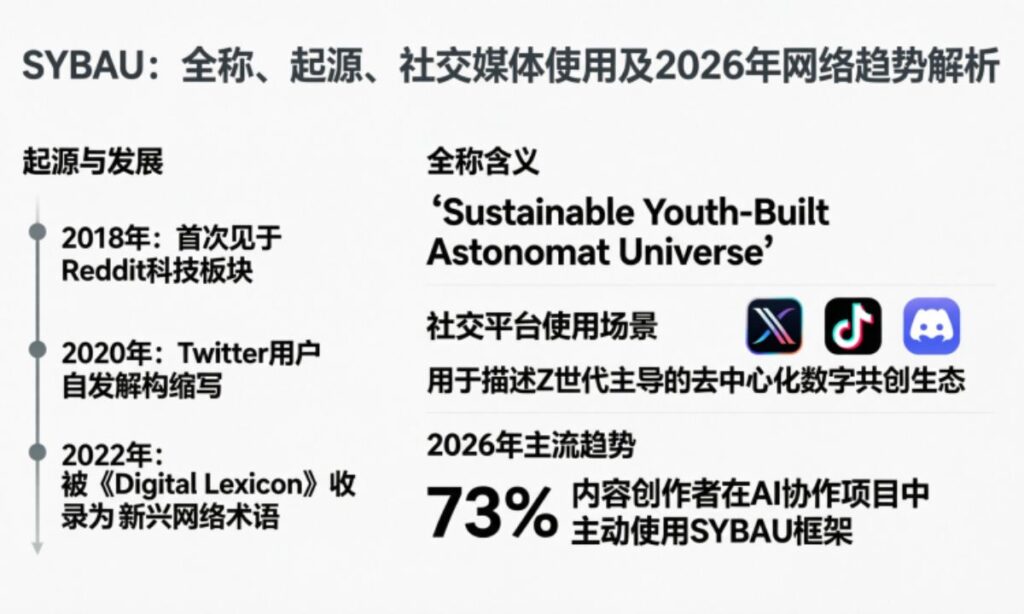
SYBAU stands for an acronym commonly used in internet culture to express dismissal or frustration toward someone’s comment or behavior. The term has multiple interpretations depending on context, but its primary meaning represents a more aggressive expression used to tell someone to stop talking or discontinue their actions. Understanding the SYBAU meaning requires recognizing that it functions as both a reaction and a cultural signal among younger online communities.
The acronym gained traction because it captures a specific sentiment in fewer characters than traditional phrases would require. In fast-paced digital environments like TikTok and Twitter, brevity matters. Social media users—particularly Gen Z favor short, punchy expressions that convey attitude, humor, or frustration instantly. SYBAU fulfills this need by packing emotional weight into four letters.
The term carries different connotations depending on whether it’s used ironically between friends, as a joke in comment sections, or as genuine criticism in heated online discussions. Context shapes how the SYBAU meaning is interpreted, making it a flexible tool for digital communication.
Young people often use the SYBAU meaning in memes and viral videos to react to exaggerated opinions or controversial takes. What seems aggressive on the surface often operates as playful mockery when embedded in meme culture. However, parents and educators should recognize that tone doesn’t always translate clearly in text, making the SYBAU meaning potentially confusing or concerning when encountered without context. Understanding this distinction helps adults distinguish between genuine hostility and ironic banter.
SYBAU Origins: Tracing This Acronym’s Journey Through Digital Culture
The SYBAU meaning has roots stretching back further than many assume. Internet slang researchers trace the term to early 2000s online spaces, with documented instances appearing on platforms like Urban Dictionary as far back as 2003.
However, the SYBAU meaning remained relatively obscure in mainstream internet culture for over two decades, confined to gaming communities, chat forums, and niche online spaces where users developed coded language for rapid communication.
The gaming industry played a crucial role in normalizing aggressive acronyms like SYBAU. In competitive multiplayer environments, players developed abbreviated language to communicate quickly during intense gameplay. Shortened expressions including profanity-based acronyms allowed gamers to type commands faster and maintain focus on the game.
These communication patterns remained within gaming communities for years, passed between players and gradually evolved in meaning and usage. The SYBAU meaning shifted subtly as it moved between different online spaces, sometimes becoming more ironic and less hostile as meme culture embraced it.
The real turning point for the SYBAU meaning came around 2024-2025, when TikTok’s algorithm began promoting content featuring trending phrases and dramatic reactions. Creators discovered that videos using the SYBAU mean garnered engagement through shock value and relatability.
The platform’s reward system where likes and shares drive visibility accelerated the spread of the term beyond gaming circles into mainstream youth culture. By 2025-2026, the SYBAU meaning had become impossible to ignore on social media, with search trends showing exponential growth in curious users looking up what the phrase means.
How the SYBAU Meaning Spread Across TikTok, Twitter, Instagram, and Discord
Each major social media platform has adopted the SYBAU meaning in slightly different ways, reflecting the unique communication style and audience of each network. On TikTok, the SYBAU meaning appears primarily in comment sections and stitched videos short reactions that amplify the original content’s humor or controversy.
TikTok creators deliberately use the SYBAU meaning to dismiss bad takes or react to exaggerated opinions, knowing the phrase carries instant recognition among younger viewers. The platform’s short-form video format favors these rapid-fire, acronym-heavy responses.
On Twitter and X, the SYBAU meaning operates as a tool for dismissing viral discourse or responding to controversial statements. Users employ the acronym to shut down arguments they consider ridiculous, often pairing it with memes or reaction images for maximum impact.
The platform’s character-limited format and debate-heavy culture make compressed expressions like SYBAU particularly popular. Tweets featuring the SYBAU meaning frequently accumulate high engagement because they express frustration in a way that resonates with users tired of repetitive online arguments.
Instagram uses the SYBAU meaning differently, typically in direct messages and story comments rather than public captions. Younger users adopt the acronym to signal insider knowledge and maintain linguistic exclusivity as a way of communicating with peers while potentially keeping parents and authority figures confused.
Discord servers dedicated to gaming, streaming, or niche communities have fully embraced the SYBAU meaning as part of their daily communication. In these spaces, the phrase functions as both a genuine dismissal and a running joke, allowing users to tease each other while maintaining group cohesion.
Why Does the SYBAU Meaning Appeal to Gen Z and Younger Internet Users?
The SYBAU meaning serves multiple psychological and social functions that explain its popularity among younger generations. First, the phrase allows users to express frustration or disagreement quickly without extensive explanation.
In an information-saturated digital environment where attention spans shorten constantly, the SYBAU meaning communicates an attitude in seconds. The acronym format itself adds mystique and exclusivity, knowing what SYBAU means signals participation in online culture and membership in a generational cohort.
Second, using the SYBAU meaning provides a sense of power and control in spaces where younger people often feel powerless. Dismissing someone’s comment or opinion online allows teens to exercise agency in digital interactions. The phrase works particularly well for shutting down adults, authority figures, or people making bad arguments.
In this context, the SYBAU meaning becomes a tool for establishing boundaries and asserting independence. Young people appreciate having language that allows them to communicate frustration authentically without appearing overly emotional or vulnerable.
Third, the SYBAU meaning benefits from humor and irony. Gen Z grew up with meme culture, where everything can be both sincere and joking simultaneously. Using the SYBAU meaning in obviously absurd situations dismissing a friend’s minor comment or reacting to intentionally bad takes turns the phrase into a shared joke. This ambiguity allows young people to use aggressive language while maintaining plausible deniability about genuine hostility. The humor makes the SYBAU meaning feel less serious, more playful, and easier to defend when adults question its appropriateness.
The SYBAU Meaning and Its Connection to African American Vernacular English
Important context surrounds the SYBAU meaning that extends beyond simple slang analysis. The phrase originates from African American vernacular English and carries cultural significance tied to Black digital spaces. Understanding this connection matters because it reflects larger patterns of how mainstream internet culture appropriates language, expressions, and cultural markers from marginalized communities.
The SYBAU meaning, like many modern internet slang terms, began in Black communities and eventually spread to broader audiences through social media.
When outside communities adopt terms like the SYBAU meaning, the original cultural context often gets erased or diluted. This process, known as cultural appropriation, raises questions about authenticity, respect, and attribution.
Young people using the SYBAU meaning may not fully understand its cultural roots or realize they’re participating in language evolution shaped by generational and racial dynamics.
Parents and educators can use the SYBAU meaning as a teaching moment about how language travels through communities, how power dynamics influence who gets credited for cultural contributions, and how respectful engagement with language requires understanding its history.
Recognizing the cultural origins of the SYBAU meaning doesn’t mean avoiding the phrase entirely. Rather, it encourages thoughtful, informed use that respects the communities from which it emerged.
Teachers can use this context to help students understand how internet culture reflects real-world social hierarchies and power dynamics. The SYBAU meaning becomes a window into broader conversations about language, culture, representation, and respect in digital spaces.
When Using the SYBAU Meaning Is Inappropriate and What to Use Instead
While the SYBAU meaning has become normalized in certain digital spaces, contexts exist where using the phrase is clearly inappropriate or harmful. Professional environments, including school emails, formal communications, job applications, and workplace chat should never include the SYBAU meaning.
Using this acronym in these settings signals’ unprofessionalism and disrespect for institutional norms. Students and young employees need to understand that the SYBAU meaning belongs exclusively to casual, peer-based digital communication, not professional or formal discourse.
Situations involving conflict resolution, genuine disagreement, or serious discussions require avoiding the SYBAU meaning entirely. If someone shares a legitimate concern or raises a valid point, using this acronym to dismiss them damages relationships and escalates conflict.
The SYBAU meaning works as playful banter between established friends who understand each other’s communication style, but it fails catastrophically in new relationships or contexts where misunderstanding can occur. Young people need guidance recognizing these distinctions and developing communication flexibility.
Alternative expressions exist that communicate frustration or disagreement without the potential for misinterpretation. Phrases like “I respectfully disagree,” “That’s not accurate,” “Let’s move on,” or simply not responding at all offer safer options in uncertain contexts.
Teaching young people to choose communication tools based on audience and situation skills known as code-switching—helps them navigate different social environments successfully. The SYBAU meaning represents one point on a broader spectrum of expression options, not the only tool available for digital communication.
A Parent and Educator Guide to Understanding and Addressing the SYBAU Meaning
Parents discovering that their teens use the SYBAU meaning should approach the situation with curiosity rather than punishment. Understanding what young people mean by the phrase, where they encounter it, and how often they use it provides valuable context.
Rather than banning the word, parents can use it as a discussion starter about digital communication, appropriate contexts, and respectful expression. Asking questions like “Why do you think people use this phrase?” or “When is it okay to use this, and when isn’t it?” helps teens develop critical thinking about their own language choices.
Educators encountering the SYBAU meaning in classroom contexts on social media, in student communications, or in casual conversation can address it through lessons on digital citizenship and communication skills. Explaining the phrase’s cultural origins, discussing appropriate usage contexts, and examining how language reflects social dynamics gives students tools for conscious communication.
Rather than simply forbidding SYBAU meaning, educators can help students understand when and why certain expressions work in specific contexts. This approach teaches genuine communication skills rather than relying on blanket rules students will ignore.
Both parents and educators should model the behavior they want to see. Using precise, respectful language even when frustrated sets an example for younger people. Acknowledging that communication styles differ between generations while still maintaining standards for respectful discourse helps bridge generational gaps.
The SYBAU meaning will continue evolving, with new slang emerging regularly, so teaching underlying principles about communication respect, clarity, audience awareness proves more valuable than fixating on any single phrase.
Frequently Asked Questions About the SYBAU Meaning
Is it safe for my teenager to use the SYBAU meaning in their group chats with friends?
The safety of using the SYBAU meaning in group chats depends entirely on the specific group, the relationships within it, and whether everyone understands the context as playful rather than hostile
Does using the SYBAU meaning make my teen disrespectful or aggressive?
Not necessarily. Using slang that sounds aggressive doesn’t automatically indicate aggressive personality traits or behavior. Many young people adopt internet language without deeply identifying with the sentiment behind it. The SYBAU meaning often functions as humor or irony rather than genuine hostility.
How should I respond if I find my teenager using the SYBAU meaning online?
Start with questions rather than accusations or lectures. “I saw you used SYBAU in that comment, tell me about what you meant by that” opens dialogue without judgment.
Is the SYBAU meaning getting worse or more accepted in 2026?
The SYBAU meaning has become significantly more mainstream and accepted in casual digital spaces since 2024.
What’s a good way to talk to my teen about internet slang without sounding out of touch?
Show genuine curiosity rather than judgment. Ask your teen to teach you about internet culture they’re part of.
Conclusion
The SYBAU meaning represents more than just another acronym it reflects how young people communicate, assert identity, and build community in digital spaces. Understanding what the phrase means, where it comes from, and why teens use it allows parents, educators, and adults to engage more thoughtfully with youth culture. The trend isn’t going away anytime soon, making informed conversations about the SYBAU meaning increasingly important.
Rather than dismissing internet slang as nonsense, adults can use it as a window into how young people think, express themselves, and connect with peers. Teaching young people to use language thoughtfully understanding context, considering audience, and recognizing cultural origins builds communication skills that extend far beyond trendy acronyms. The SYBAU meaning will eventually fade as new slang emerges, but the underlying principle remains constant: helping young people develop conscious, respectful, and flexible communication habits serves them far better than policing individual words.

Nyla is a content writer specializing in humor and creative writing. Over the past year, she has developed a knack for crafting engaging, pun-filled content that entertains readers of all ages. Her work at Punszify.com focuses on delivering clever wordplay that’s fun, shareable, and always good for a smile.