

Pun examples are a cornerstone of wordplay, offering readers a glimpse into the playful side of language. Whether you are a writer, educator, or simply someone who enjoys a good laugh, understanding pun examples can elevate your communication skills and entertain those around you. A pun is a form of humour that exploits multiple meanings of a word or similar-sounding words.
These clever puns examples demonstrate how language can bend and twist to create unexpected moments of delight. The power of puns example lies in their ability to engage multiple levels of linguistic understanding simultaneously, rewarding audiences who catch the connection.
It come in many forms, from the obvious to the subtle, from the groan-worthy to the intellectually satisfying. Some pun examples make us groan with their obviousness, whilst others make us appreciate the ingenuity and precision required to craft effective wordplay. The beauty of pun examples lies in their remarkable versatility.
They can appear in literature, advertising, comedy sketches, professional presentations, and everyday conversation. Understanding the mechanics behind these pun examples helps us appreciate wordplay on a deeper level and even create our own clever pun examples that will delight or amuse our audience. Pun examples have been employed by everyone from Shakespeare to contemporary social media influencers, demonstrating their timeless appeal.
What Is a Pun
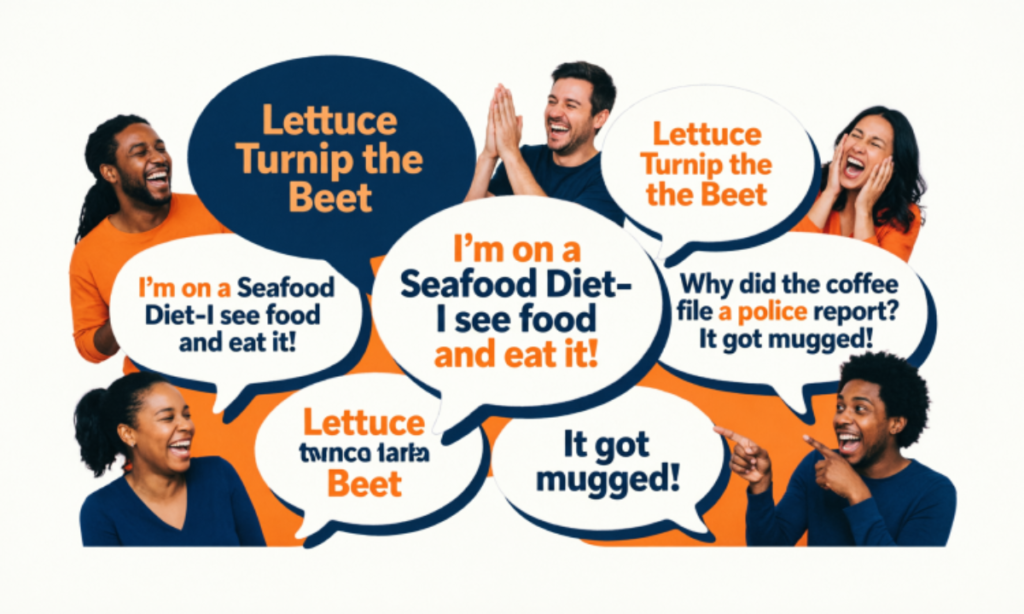
Understanding what defines a pun is essential before exploring them in depth. A pun is a deliberate play on words that exploits multiple meanings or similar pronunciations to create a humorous or witty effect. According to linguistic experts, pun examples appear throughout literature and language because they demonstrate our language’s inherent flexibility and richness.
1. I’m reading a book about puns. It’s a pun-derful experience.
2. Puns are a form of wordplay that’s truly pun-believable.
3. Without puns, our language would be pun-deniably boring.
4. Puns make conversations more pun-tactious and engaging.
5. The study of puns is absolutely pun-derstanding.
6. I could not help but pun-der the meaning of wordplay.
7. Puns are a language lover’s pun-ultimate joy.
8. This pun example is truly pun-nominal in quality.
9. Puns deserve our pun-derstanding and appreciation.
10. The art of punning is pun-doubtedly an ancient tradition.
11. They show the pun-omenal power of language.
12. Creating good pun examples requires pun-tastic creativity.
13. I’m absolutely pun-sessed with wordplay.
14. They are a pun-derer’s delight.
15. The definition of puns is pun-ambiguous.
16. Understanding puns is pun-dispensable knowledge.
17. They demonstrate pun-deniable talent.
18. Wordplay and pun examples are pun-derfully interconnected.
19. The history of pun examples is pun-describably rich.
20. These are never pun-ecessary, but always appreciated.
21. Creating pun examples requires pun-ticular attention to detail.
22. Pun examples showcase pun-derstanding of language structure.
23. The impact of pun examples is pun-measurable.
24. They bring pun-tastic humour to any conversation.
25. Understanding pun examples is pun-damentally important.
26. These are a pun-derful way to express creativity.
27. The essence of pun examples is pun-derstandable to all.
28They demonstrate pun-paralleled linguistic skill.
29. Without pun examples, literature would be pun-deniably dull.
30. They are pun-dispensably entertaining.
31. The versatility of pun examples is pun-doubtable.
32. Creating effective pun examples is a pun-ticular art form.
33. Pun examples prove that language is endlessly pun-ful.
34. The charm of pun examples is pun-deniably universal.
35. Pun examples add pun-tastic flavour to communication.
36. Understanding pun examples opens pun-limited possibilities.
37. They are pun-derstandably popular worldwide.
38. The definition of wordplay includes all pun examples.
39. They showcase language’s pun-omenal potential.
40. Mastering Them requires pun-deniable dedication.
They operate on the principle of linguistic ambiguity and surprise. When a word has multiple meanings or when two words sound alike but have different meanings, pun examples emerge from that space. They are rely on the reader’s or listener’s knowledge of language to create that satisfying aha moment.
The cognitive shift required to understand pun examples makes them memorable and engaging, whether they appear in professional writing, casual conversation, or creative literature. This is why pun examples continue to be valued by writers, comedians, and language enthusiasts across all domains.
More Clever Puns You’ll Love
For those seeking inspiration and entertainment, pun examples that make you smile are plentiful and endlessly creative. They showcase the cleverness that wordplay can achieve when crafted with precision and imagination. The best pun examples often surprise us with their ingenuity, forcing us to reconsider the words we use every day and their hidden potential for dual meaning.
Exploring them, reveals how language can be simultaneously playful and sophisticated, entertaining and intellectually stimulating. These pun examples range from the obviously silly to the deceptively clever, offering something for every sense of humour.
1. I tried to catch fog yesterday. Mist.
2. Time flies like an arrow. Fruit flies like a banana.
3. Did you hear about the mathematician who’s afraid of negative numbers. He’ll stop at nothing to avoid them.
4. Parallel lines have so much in common. It’s a shame they’ll never meet.
5. I’m terrified of elevators, so I’m taking steps to avoid them.
6. A bicycle can’t stand on its own because it’s two tired.
7. What do you call a fish wearing a bowtie. Sour-fish.
8. I stayed up all night wondering where the sun went. Then it dawned on me.
9. I used to hate facial hair, but then it grew on me.
10. The rotation of earth really makes my day.
11. A drum takes a beating.
12. I couldn’t figure out why the baseball kept getting larger. Then it hit me.
13. Did you hear about the claustrophobic astronaut. He just needed a little space.
14. A bicycle shop owner was very successful. He really knew how to pedal.
15. A book just fell on my head. I only have my shelf to blame.
16. I told my computer I needed a break, and now it won’t stop sending me Kit-Kat ads.
17. Why don’t scientists trust atoms. Because they make up everything.
18. I’m reading a book on the history of glue. Can’t put it down.
19. I would avoid the sushi if I were you. It’s a little fishy.
20. What’s the difference between a poorly dressed man on a bicycle and a well-dressed man on a tricycle. Attire.
21. I used to be addicted to soap, but I’m clean now.
22. I’m reading a book about anti-gravity. It’s impossible to put down.
23. How does a penguin build its house. Igloos it together.
24. Why did the coffee file a police report. It got mugged.
25. I’m trying to organize a hide and seek tournament, but good players are really hard to find.
26. I made a timeline of Egyptian history. Turns out it was all about Nile-ism.
27. The rotation of earth makes my day.
28. What do you call someone who doesn’t like carbs. A low-key person.
29. I told my wife she was drawing her eyebrows too high. She looked surprised.
30. Why don’t oysters donate pearls to charity. Because they’re shellfish.
31. I’ll never forget the last time I saw my grandfather. We were at the funeral home.
32. Did you hear about the guy who invented Lifesavers. He made a mint.
33. What did the ocean say to the beach. Nothing, it just waved.
34. I’ve been trying to organize a Hide and Seek game in the cemetery. Turns out everyone who tries is a loser.
35. I wanted to learn how to drive a stick shift, but it was too clutch.
36. They told me I had type-A blood, but it was a Type-O.
37. I’ll never be a vegetarian. I’ll never survive on chia seeds alone.
38. You want to know the secret to success. It’s all about having a good foundation.
39. What does a clock do when it’s hungry. It goes back four seconds.
40. I really want to try horsemeat, but I don’t know what it would taste like. Let me ask my neighbour. He lives in a stable.
These pun examples demonstrate the remarkable range of wordplay available to anyone willing to look for it. Each of these pun examples plays with language in a unique way that rewards attention and reflection.
Some rely on homonyms (words with multiple meanings), whilst others exploit homophones (words that sound alike but mean different things). The creativity involved in constructing pun examples makes them valuable for writers, comedians, and anyone seeking to improve their linguistic skills and entertainment value.
Why Writers Use Puns
Writers across all genres employ pun examples for various strategic and creative reasons. Pun examples add rhythm, personality, and memorable moments to text that might otherwise feel flat or predictable. They break up serious passages with levity and demonstrate the author’s command of language and playfulness.
They also encourage readers to engage more deeply with text, as understanding them requires active participation and linguistic awareness. From Shakespeare to contemporary authors, writers have recognised the powerful effect pun examples have on audiences.
Pun Examples in Sentences
The most effective pun examples often appear within sentences where they serve multiple purposes simultaneously. “I’d tell you a chemistry joke, but I know I wouldn’t get a reaction” works brilliantly because reaction refers both to chemical processes and to how people respond to jokes. Similarly, “I stayed up all night wondering where the sun went.
Then it dawned on me” uses the word dawned both literally (the sun appears at dawn) and figuratively (realisation occurs). These pun examples demonstrate how context matters enormously in wordplay, with the surrounding text setting up audience expectations that the pun then subverts.
When crafting pun examples for sentences, writers must ensure they flow naturally within the narrative rather than feeling forced or artificial. Forced pun examples disrupt reading flow and annoy audiences, whilst seamlessly integrated pun examples enhance communication and delight readers.
The best example feel inevitable once understood, as though the language naturally led to that particular play on words. This quality of seeming inevitable makes pun examples both an art and a craft worth studying. Professional writers often spend considerable time refining pun examples to achieve this perfect balance between surprise and naturalness.
Simple Pun Examples
Simple pun examples often prove the most effective because they rely on commonly understood words and concepts that span audiences of all ages and educational backgrounds. These pun examples do not require obscure knowledge or elaborate setup to land effectively.
Instead, they demonstrate the principle that wordplay does not need to be complex to be clever or entertaining. Simple pun examples often appeal strongly to younger audiences whilst still entertaining adults who appreciate straightforward humour and accessibility. The simplicity of these pun examples belies their effectiveness as communication tools.
1. A bicycle can’t stand alone because it’s two tired.
2. Time flies like an arrow. Fruit flies like a banana.
3. I’m terrified of elevators, so I’m taking steps to avoid them.
4. Did you hear about the restaurant on the moon. Great food, no atmosphere.
5. What time is it when an elephant sits on your fence. Time to get a new fence.
6. I used to be addicted to soap, but I’m clean now.
7. I stayed up all night wondering where the sun went. Then it dawned on me.
8. What do you call a sleeping bull. A bulldozer.
9. Why don’t scientists trust atoms. Because they make up everything.
10. A book just fell on my head. I only have my shelf to blame.
11. I would avoid the sushi if I were you. It’s a little fishy.
12. What did the ocean say to the beach. Nothing, it just waved.
13. I’m reading a book on the history of glue. Can’t put it down.
14. Did you hear about the claustrophobic astronaut. He just needed a little space.
15. I told my wife she was drawing her eyebrows too high. She looked surprised.
16. What do you call a fish wearing a bowtie. Sour-fish.
17. Why don’t oysters donate pearls to charity. Because they’re shellfish.
18. I couldn’t figure out why the baseball kept getting larger. Then it hit me.
19. How does a penguin build its house. Igloos it together.
20. Why did the coffee file a police report. It got mugged.
21. I used to hate facial hair, but then it grew on me.
22. The rotation of earth really makes my day.
23. A drum takes a beating.
24. Did you hear about the guy who invented Lifesavers. He made a mint.
25. I’m trying to organize a hide and seek tournament, but good players are really hard to find.
26. A bicycle shop owner was very successful. He really knew how to pedal.
27. Parallel lines have so much in common. It’s a shame they’ll never meet.
28. I tried to catch fog yesterday. Mist.
29. The mathematician said he had the solution at his fingertips.
30. I’m reading a book about anti-gravity. It’s impossible to put down.
31. What’s the difference between a poorly dressed man on a bicycle and a well-dressed man on a tricycle. Attire.
32. I wanted to learn how to drive a stick shift, but it was too clutch.
33. They told me I had type-A blood, but it was a Type-O.
34. What does a clock do when it’s hungry. It goes back four seconds.
35. I told my computer I needed a break, and now it won’t stop sending me Kit-Kat ads.
36. Did you hear about the claustrophobic astronaut. He just needed a little space.
37. I made a timeline of Egyptian history. Turns out it was all about Nile-ism.
38. I really wanted to tell a chemistry joke, but I feared no reaction.
39. The baker quit because he didn’t get a rise out of his job.
40. A bicycle shop owner was extremely successful. He really knew how to wheelie manage his business.
Frequently Asked Questions About Pun Examples
What exactly defines a pun example?
A pun is a form of wordplay that exploits multiple meanings of a word or words that sound similar but have different meanings.
How can I create effective pun examples?
Creating successful pun examples requires understanding your audience, considering context, and practising regularly.
Are pun examples appropriate for professional writing?
They can enhance professional writing depending on context and industry norms. Marketing and advertising frequently employ pun examples to create memorable messages.
What is the difference between homophonic and homographic pun examples?
Homophonic pun examples rely on words that sound identical but have different spellings and meanings.
Why do pun examples often provoke groaning responses?
They often produce groaning responses because they exploit language in unexpected ways that can feel simultaneously clever and obvious once revealed.
Conclusion
Throughout this comprehensive exploration of pun examples, we have discovered how wordplay permeates language and culture at every level. From ancient literature to modern social media, pun examples demonstrate humanity’s enduring appreciation for linguistic creativity and playfulness.
We have examined multiple types of pun examples, explored their functions in various contexts, and considered both their strengths and limitations. Understanding pun examples deepens our appreciation for language’s flexibility and creative potential. The journey through pun examples reveals their importance as communication tools and sources of joy.
As you move forward, consider how pun examples might enhance your own communication, whether written or spoken. The strategies discussed throughout this article provide tools for both enjoying pun examples created by others and crafting your own wordplay.
Remember that effective puns require practice, self-reflection, and willingness to experiment with language’s many possibilities. By engaging thoughtfully with pun examples, you join a long tradition of language lovers who recognise wordplay’s unique power to entertain, connect, and transform ordinary communication into something memorable and delightful.

Nyla is a content writer specializing in humor and creative writing. Over the past year, she has developed a knack for crafting engaging, pun-filled content that entertains readers of all ages. Her work at Punszify.com focuses on delivering clever wordplay that’s fun, shareable, and always good for a smile.