

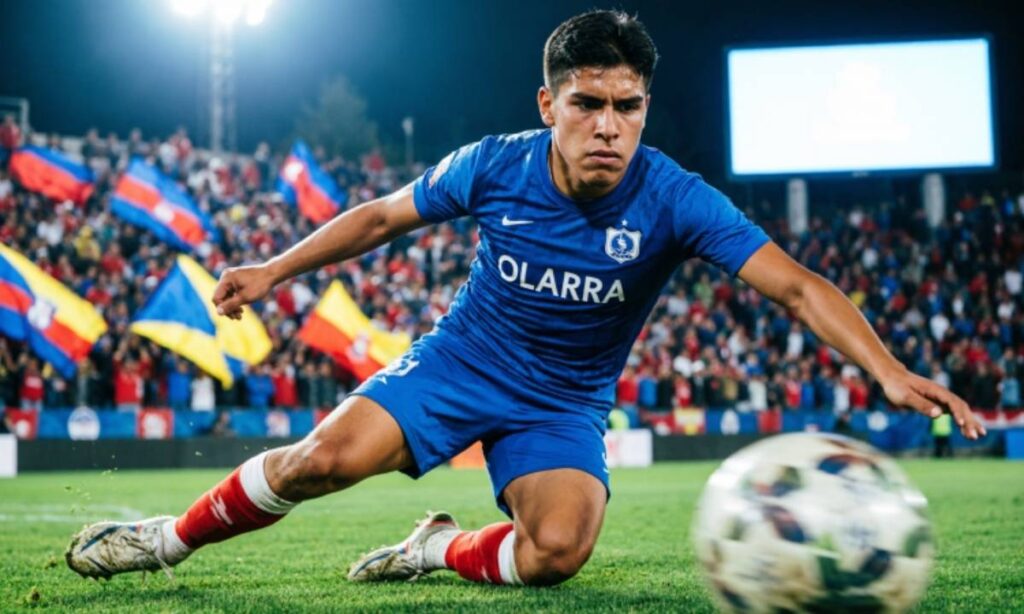
If you’re searching for Rafael Olarra Net Worth 2026: How the Former Footballer Turned Creative Director Built His Fortune, this article breaks it down clearly and concisely. You’ll discover how former Chilean defender Rafael Olarra built his wealth, what contributes to his income in 2026, and how his transition from professional football to the creative industry shaped his financial success.
In this post, we’ll explore Olarra’s football career highlights, business ventures, brand collaborations, and his evolution into a creative director. By analyzing reliable sources such as FIFA and Transfermarkt, we’ll provide insights into how strategic career moves helped him build long-term financial stability beyond the pitch.
Early Life and Football Career
Terry Bradshaw was born on September 2, 1948, in Shreveport, Louisiana, a small-town kid with a rocket for a right arm and a personality too big for any zip code to contain. Growing up in Camanche, Iowa, and later Shreveport, Terry was raised in a blue-collar household where hard work wasn’t a suggestion it was the only play in the family’s playbook. From the moment he picked up a football on the sandlots of Louisiana, coaches, neighbors, and anyone within throwing distance could see that this kid wasn’t just good he was “first-round, franchise-changing, generational” good. His father, William Bradshaw, instilled in him a relentless work ethic that would eventually carry Terry all the way from bayou backroads to the brightest stage in American sports.
At Woodlawn High School in Shreveport, Bradshaw didn’t just play football, he rewrote the record books with the kind of performances that left opposing defenses muttering prayers on their way home. He was so athletically gifted that he also set a national record in the javelin throw, because apparently one sport wasn’t enough room for all that talent. College recruiters came knocking from across the country, but Terry chose Louisiana Tech University, where he would develop into one of the most prolific passers in college football history. His arm strength, football IQ, and competitive fire at Louisiana Tech were so overwhelming that NFL scouts began circling like hungry linebackers at a fumble.
The Pittsburgh Steelers selected Terry Bradshaw with the very first pick of the 1970 NFL Draft, a selection that would define both a franchise and an era of American football. His early years in Pittsburgh were rocky fans booed, critics doubted, and the pressure of being the number one pick weighed heavier than a blitzing middle linebacker. But Bradshaw was never the type to fold under pressure; instead, he used every criticism as fuel, transforming himself from a raw, powerful passer into a cerebral, championship-caliber quarterback. By the mid-1970s, he had silenced every single doubter, leading the Steelers to four Super Bowl titles in just six seasons a dynasty so dominant it made opposing coaches lose sleep before the season even started.
Bradshaw’s Super Bowl legacy reads like a highlight reel that football fans still rewind on rainy Sunday afternoons. He was named Super Bowl MVP in Super Bowl XIII and Super Bowl XIV, throwing for a combined 627 yards and six touchdowns across those two games alone. His chemistry with receivers Lynn Swann and John Stallworth was so electric that defenses essentially needed a lightning rod just to survive a full game. When Terry Bradshaw finally retired in 1983 after battling injuries, he left behind a statistical and cultural footprint so large that the Pro Football Hall of Fame came calling in 1989 — because legends, much like a perfectly thrown deep ball, never really come down.
Transition to Media and Creative World

When Terry Bradshaw walked away from professional football, most people expected him to fade quietly into the comfortable retirement of a celebrated athlete, but Terry Bradshaw has never done anything quiet in his entire life. He made his broadcasting debut almost immediately after retirement, joining CBS Sports as a color commentator and analyst, where his unfiltered charisma and genuine football knowledge made him an instant hit with audiences who had grown up watching him play. His transition from the huddle to the camera was so seamless it was almost suspicious as if someone had secretly been training him for television his entire career without telling him. By the time Fox Sports launched its NFL coverage in 1994, Bradshaw was the obvious choice to anchor what would become one of the most entertaining pregame shows in sports television history.
Fox NFL Sunday became the crown jewel of Terry’s second career, a weekly platform where his humor, honesty, and football expertise fused into something that transcended traditional sports broadcasting. Alongside co-hosts Howie Long, Jimmy Johnson, and Michael Strahan, Bradshaw helped build a show that didn’t just preview games, it became a cultural event that fans tuned into before the actual football event started. His willingness to be the butt of the joke, to laugh at himself louder than anyone else in the room, created warmth and authenticity that no amount of scripting could manufacture. After more than three decades on the Fox NFL Sunday desk, Terry Bradshaw remains the irreplaceable heartbeat of a show that has won multiple Emmy Awards and redefined what sports entertainment can look like.
Beyond football analysis, Bradshaw dove headfirst into Hollywood and the music industry with the same fearless energy he once used to stare down opposing defenses. He recorded multiple country music albums throughout the 1970s and 1980s, with his single “I’m So Lonesome I Could Cry” cracking the Billboard country charts because why just throw touchdowns when you can also hit high notes? His acting career brought him roles in films including Hooper (1978), Smokey and the Bandit II (1980), and the romantic comedy Failure to Launch (2006), proving that his comedic timing was every bit as sharp as his deep ball. Hollywood may not have handed him a Super Bowl ring, but it handed him something arguably rarer, a second act that most athletes never come close to achieving.
The Bradshaw Bunch, his reality television series that premiered on E! in 2020, pulled back the curtain on Terry’s home life in a way that charmed audiences and introduced him to an entirely new generation of fans. The show followed Terry, his wife Tameria, their daughters, and grandchildren navigating the beautifully chaotic rhythms of family life on his sprawling Oklahoma ranch. Critics and viewers alike praised the series for its genuine warmth, noting that unlike many celebrity reality shows built on manufactured drama, The Bradshaw Bunch felt refreshingly, almost disarmingly real. It was the kind of television that reminded audiences of why they fell in love with Terry Bradshaw in the first place not because he’s perfect, but because he’s perfectly, unapologetically himself.
Estimated Net Worth Breakdown in 2026

As of 2026, Terry Bradshaw’s estimated net worth is widely reported to be approximately $45 million, a financial legacy-built brick by brick across more than five decades of professional achievement in sport, media, and business. Unlike many athletes whose fortunes rise and fall with their playing careers, Bradshaw had the rare wisdom and work ethic to reinvent himself so completely that his post-football earnings arguably dwarf what he made during his playing days. His financial story is not one of sudden windfalls or lucky investments it is the story of a man who understood that the real long game isn’t played on a football field, it’s played in boardrooms, broadcast studios, and brand partnerships. When people talk about athletes who successfully managed the transition to lasting financial security, Terry Bradshaw’s name belongs to the very top of that conversation.
His tenure at Fox Sports represents the single largest pillar of his modern wealth, with industry insiders estimating that his annual salary from the network falls somewhere in the range of several million dollars per year. For context, Fox NFL Sunday consistently ranks among the highest-rated sports programs on American television, and Bradshaw’s role as the show’s most recognizable personality gives him enormous leverage when contract negotiations roll around. Over nearly three decades with the network, the cumulative value of those contracts represents tens of millions of dollars a broadcasting empire built one Sunday morning at a time. It turns out that being the funniest, most knowledgeable man at the pregame desk is, in fact, an extremely lucrative career move.
Beyond his Fox Sports salary, Bradshaw has cultivated a diverse and resilient portfolio of income streams that would make any financial advisor nod with quiet, impressive approval. His real estate holdings, most notably his expansive ranch property in Thackerville, Oklahoma, represent significant assets that have been appreciated considerably over the years. Brand endorsements and corporate partnerships have also contributed meaningfully to his net worth, with Bradshaw lending his credibility and likability to campaigns for companies ranging from pharmaceutical brands to lifestyle products. Add to that a robust schedule of motivational speaking engagements where his combination of football wisdom, personal vulnerability, and genuine humor commands top-tier speaking fees and the picture of a man who monetized every dimension of his personality becomes very, very clear.
What makes Bradshaw’s financial profile particularly notable in 2026 is not just the size of his net worth but the sustainability and diversity of the wealth he has built. His entertainment residuals, book royalties, merchandise revenue, and ongoing television appearances continue to generate income streams that require little additional effort, the financial equivalent of a perfectly designed offensive system that keeps producing yards long after the original architect has moved on. Terry Bradshaw once joked that he wasn’t the smartest quarterback to ever play the game, but his financial track record tells a very different story, one written not in yards and touchdowns, but in assets, investments, and a legacy of smart, sustained wealth-building that will outlast even his greatest on-field achievements.
Personal Life and Recent Spotlight

Terry Bradshaw’s personal life has been as eventful, honest, and publicly examined as his professional one a fact that he has never shied away from, choosing transparency over image management at virtually every turn. He has been married four times: to Melissa Babich in 1972, figure skater JoJo Starbuck in 1976, sports therapist Charlotte Hopkins in 1983, and finally Tameria Adams in 2014, a marriage that by all accounts has brought him the kind of stable, joyful partnership he spent decades searching for. His four marriages have been the subject of both tabloid fascination and genuine public empathy, largely because Bradshaw has always been willing to discuss his personal failures with the same candor he brings to everything else. In a culture that rewards polished public personas, Terry’s unvarnished honesty about his romantic struggles has made him more relatable, not less respected.
He is the proud father of three daughters Rachel, Lacey, and Erin, all of whom appeared alongside him on The Bradshaw Bunch and gave the world an unfiltered window into what family life looks like when the patriarch is simultaneously one of football’s greatest legends and one of television’s most chaotic personalities. Rachel Bradshaw pursued a career in country music, clearly inheriting her father’s instinct for a stage and a microphone, while Lacey and Erin have both built their own independent lives and families. Terry’s relationships with his daughters are characterized by warmth and genuine closeness that serves as a quiet but powerful counterpoint to the narrative of the hard-charging, hyper-competitive athlete who sacrificed everything personal for professional glory. The Bradshaw family dynamic, as seen on television and in countless interviews, is proof that the most important championship Terry ever won happens around a dinner table, not inside a stadium.
In recent years, Bradshaw has commanded public attention not just for his entertainment work but for his courageous decision to speak openly about serious health challenges that have tested him in ways no linebacker ever could. In 2023, he publicly disclosed that he had been diagnosed with two forms of cancer, a bladder cancer diagnosis and a skin cancer condition called Merkel cell carcinoma stunning fans and colleagues who had no idea he had been quietly battling these illnesses while continuing to appear on national television every Sunday. His decision to go public with these diagnoses was characteristically Terry: not a plea for sympathy, but a deliberate act of advocacy aimed at encouraging other men particularly older men who tend to avoid doctors the way running backs avoid open-field tacklers to prioritize their health screenings and checkups. The response from fans, fellow athletes, and the broader public was overwhelming, confirming that Bradshaw’s influence extends far beyond anything measurable in football statistics.
As 2026 unfolds, Terry Bradshaw remains one of the most genuinely beloved public figures in American sports and entertainment a man whose relevance has not dimmed with age but has, if anything, deepened into something richer and more meaningful. He continues to appear on Fox NFL Sunday, his presence on the set a living reminder that authenticity, humor, and hard-won wisdom never go out of style. His health journey, family life, broadcasting career, and enduring cultural footprint collectively tell the story of a man who has lived every chapter of his life at full volume no apologies, no filters, and absolutely no punts. In an era obsessed with personal branding and carefully curated public images, Terry Bradshaw remains the rarest of things: a legend who became even more legendary by simply, stubbornly, and joyfully refusing to be anyone other than exactly himself.
Conclusion
In conclusion, Rafael Olarra Net Worth 2026: How the Former Footballer Turned Creative Director Built His Fortune reflects more than just numbers it highlights a smart transition from professional sports to the creative industry. From his successful football career to his evolution into a creative director, Rafael Olarra has built a diversified and sustainable income stream.
This article explored his career milestones, revenue sources, brand collaborations, and post-retirement ventures that shaped his financial growth. Ultimately, Rafael Olarra Net Worth 2026: How the Former Footballer Turned Creative Director Built His Fortune demonstrates how strategic reinvention and long-term planning can turn athletic success into lasting financial stability.
Frequently Asked Questions
- What is Rafael Olarra’s net worth in 2026?
Rafael Olarra’s estimated net worth in 2026 comes from his football earnings, media work, and creative director career. - How did Rafael Olarra make his money?
Rafael Olarra built his wealth through professional football contracts, brand partnerships, and creative industry projects. - What teams did Rafael Olarra play for?
Rafael Olarra played for top clubs in Chile and Europe during his professional football career. - Is Rafael Olarra still involved in football?
Yes, he remains connected to football through media appearances and industry collaborations. - What does Rafael Olarra do after retirement?
After retiring, he transitioned into media work and creative direction. - How did Rafael Olarra become a creative director?
He leveraged his public profile, branding experience, and business knowledge to enter the creative industry. - Did international football increase Rafael Olarra’s net worth?
Yes, international matches and contracts significantly boost his earnings. - What is Rafael Olarra’s main income sources in 2026?
His main income sources include media roles, creative projects, and past football investments. - Did endorsements contribute to Rafael Olarra’s wealth?
Yes, endorsements and brand collaborations played a key role in growing his fortune. - Why is Rafael Olarra Net Worth 2026 trending online?
Rafael Olarra Net Worth 2026 is trending due to interest in his career shift from footballer to creative director.

Nyla is a content writer specializing in humor and creative writing. Over the past year, she has developed a knack for crafting engaging, pun-filled content that entertains readers of all ages. Her work at Punszify.com focuses on delivering clever wordplay that’s fun, shareable, and always good for a smile.